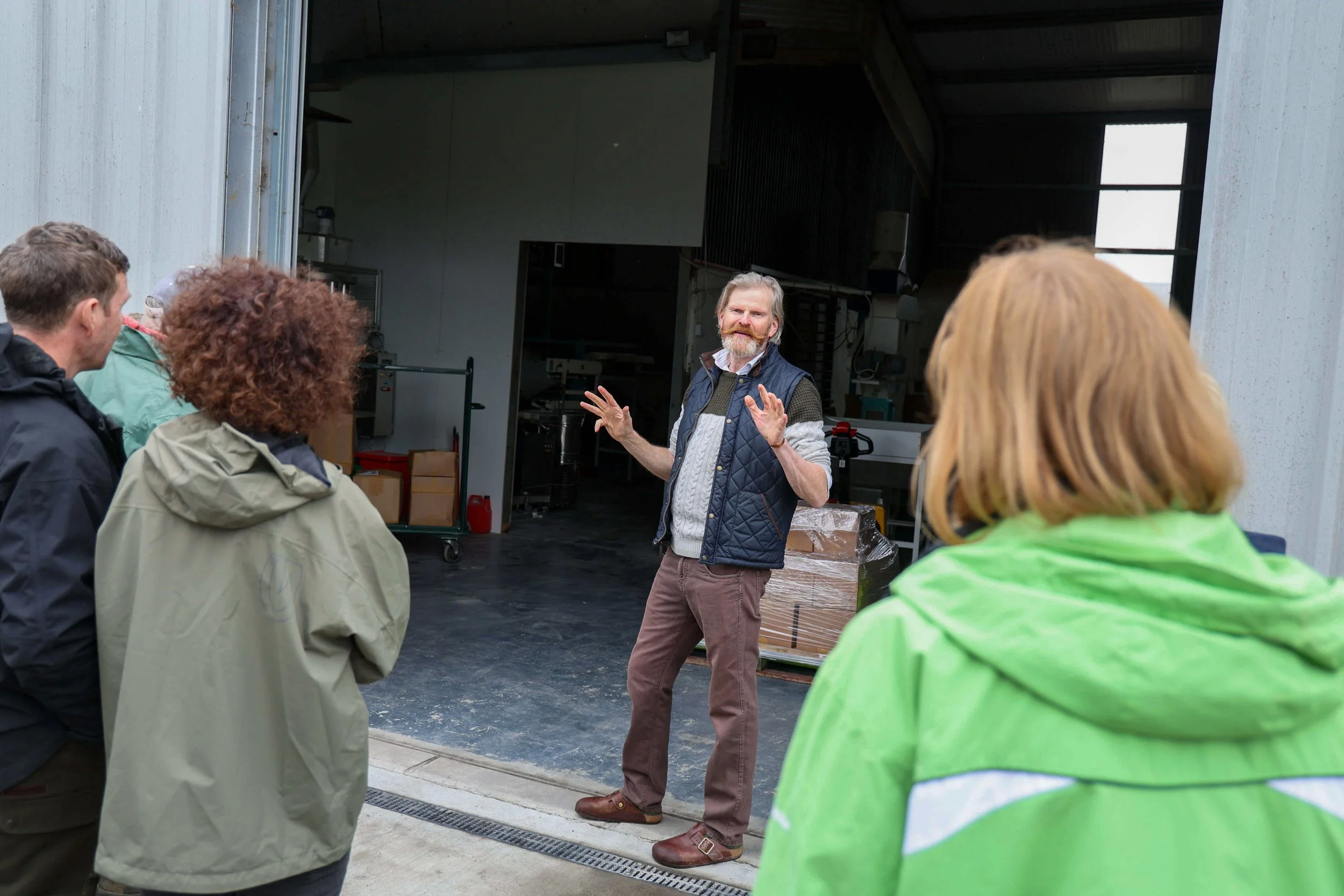
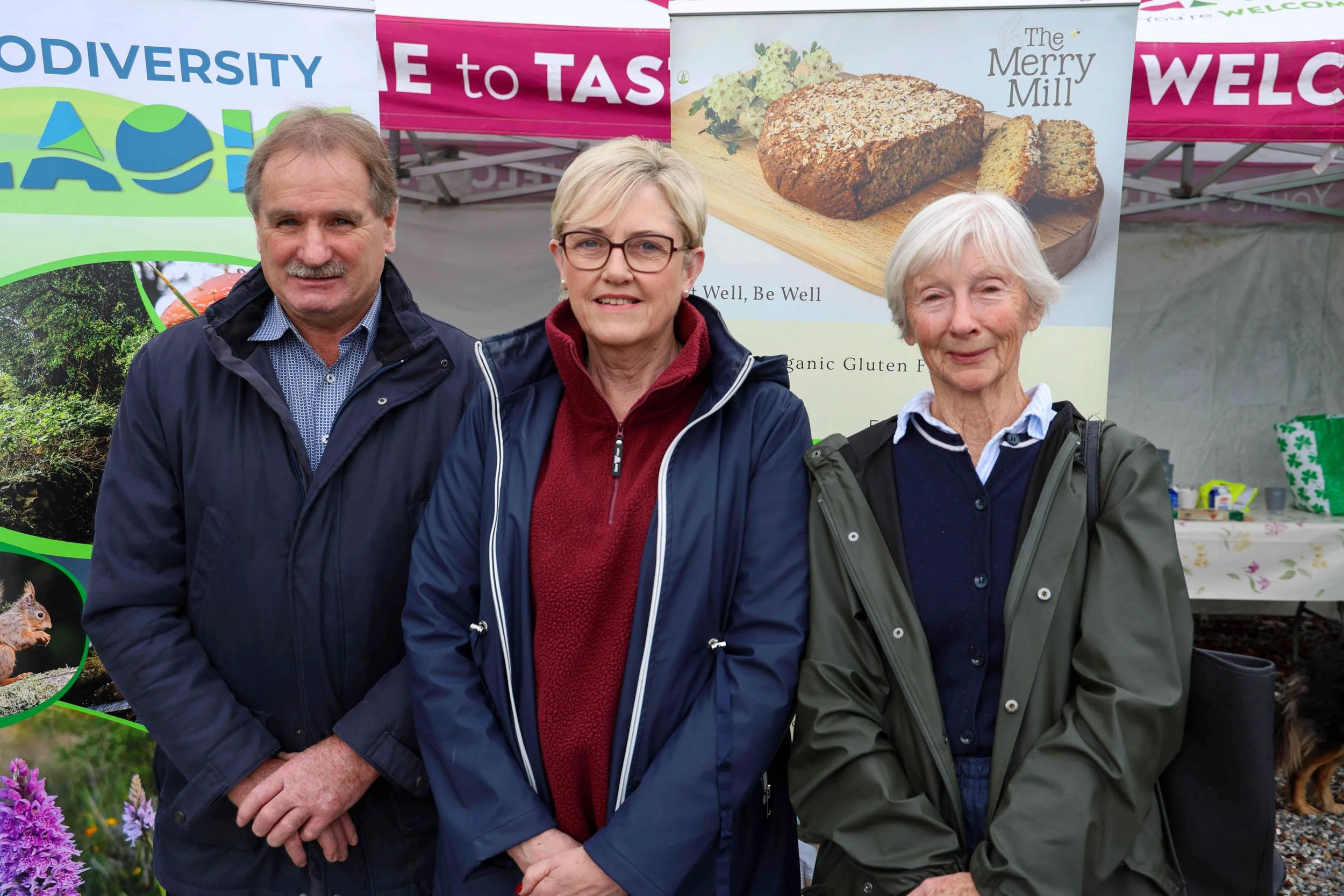
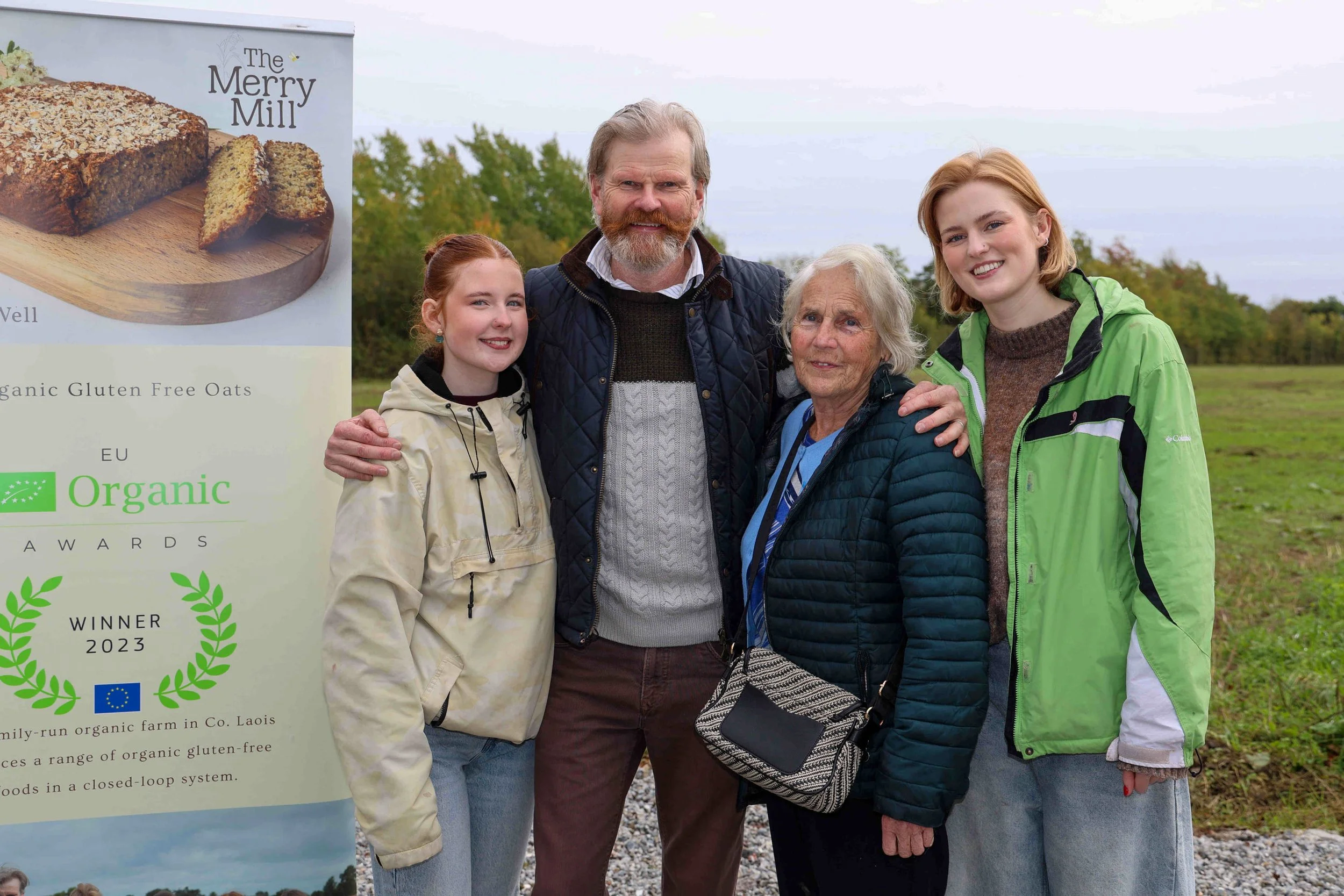
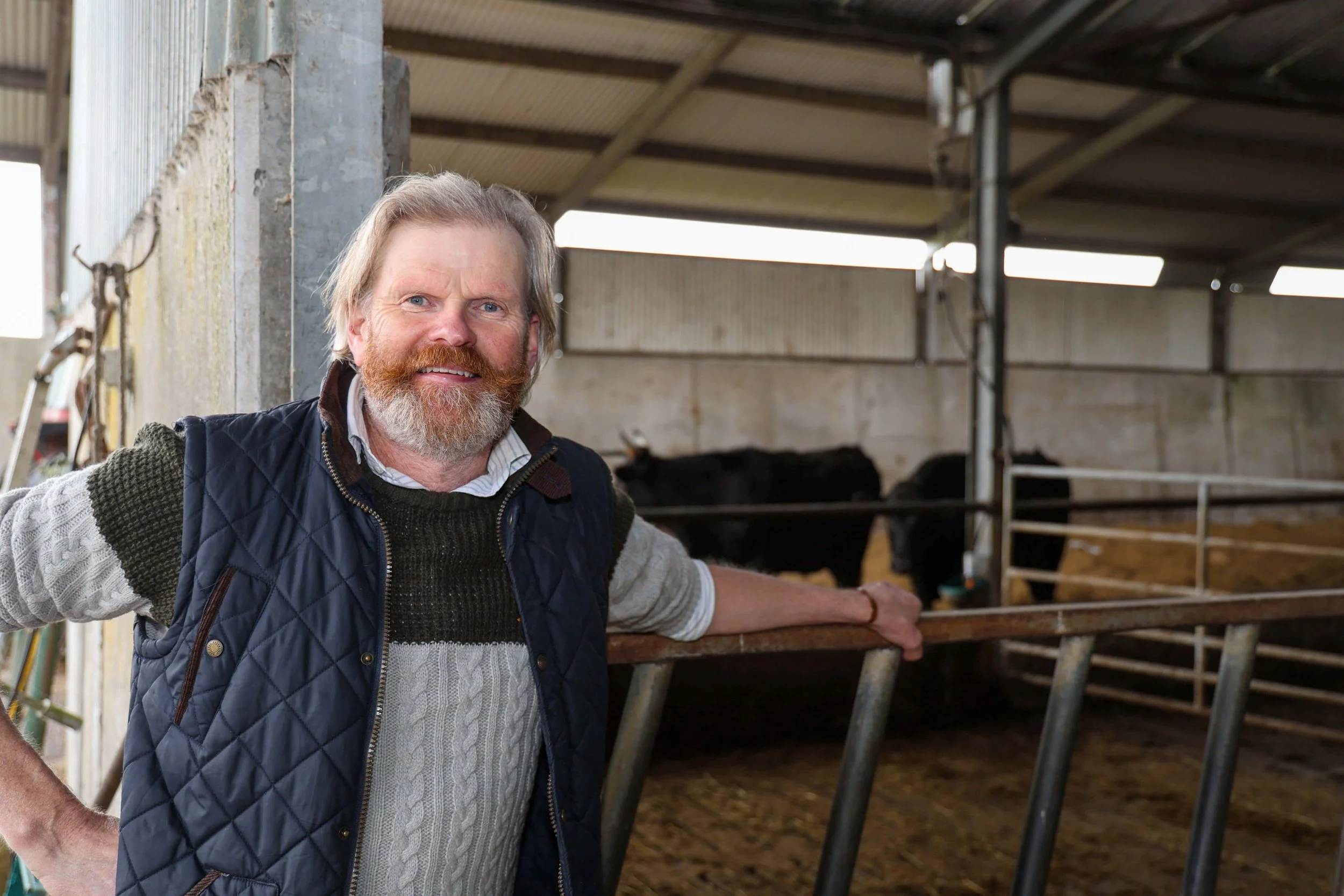
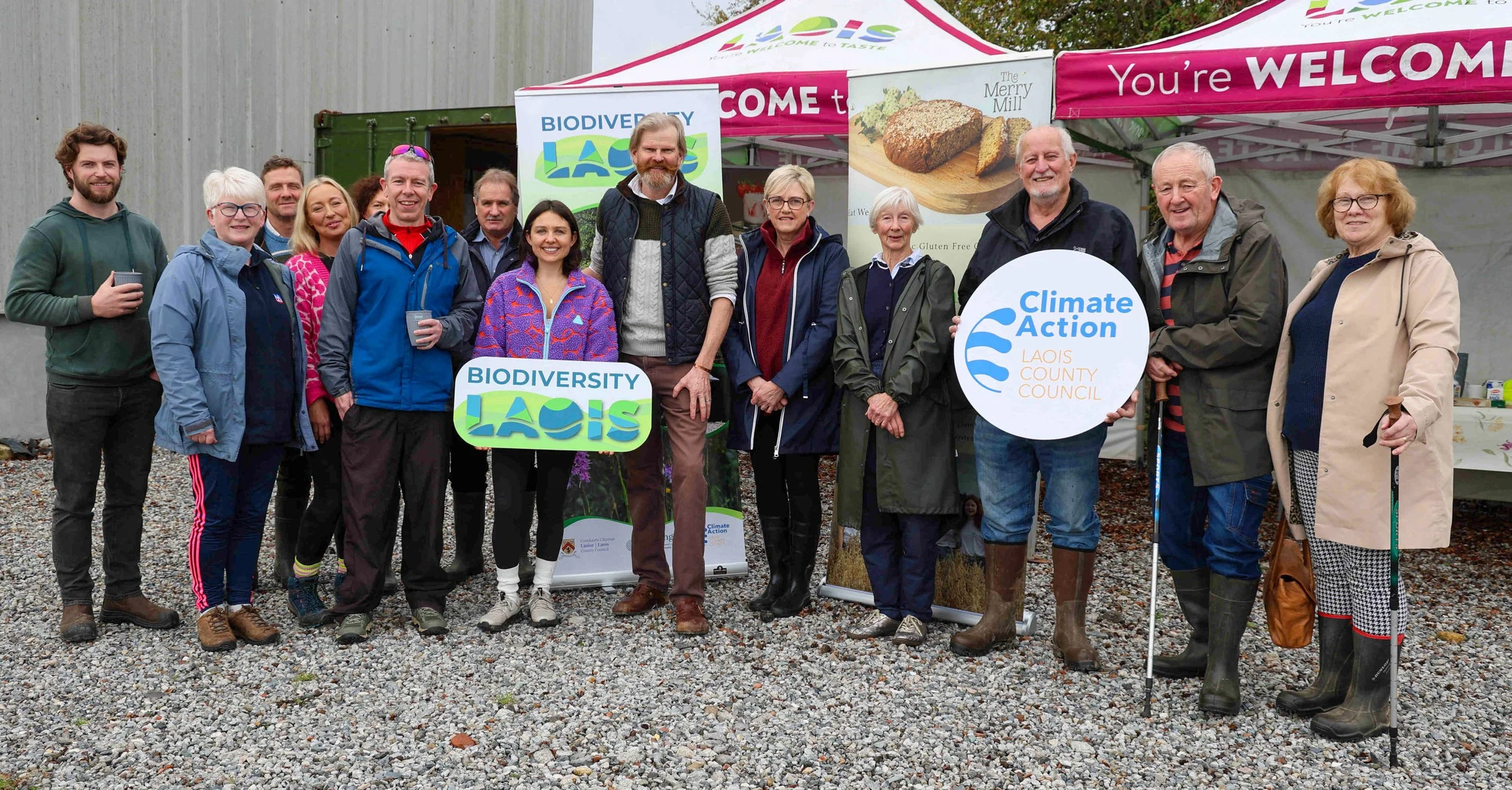
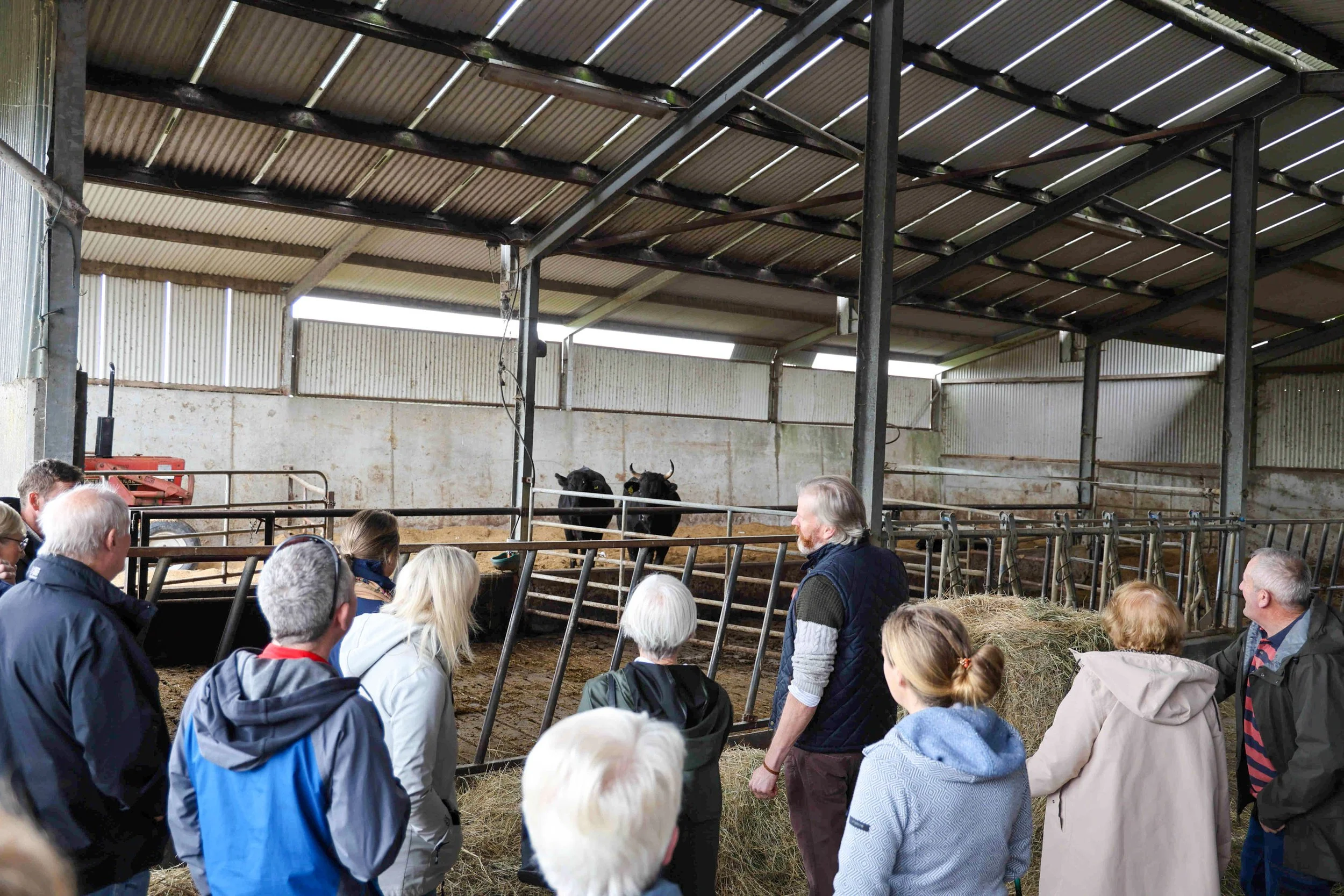
As part of Climate Action Week, we were delighted to host two farm walks in collaboration with Laois County Council, welcoming visitors onto the farm to see first-hand how farming and nature can work together to benefit both the environment and the farm business.
For us, sustainability isn't simply about protecting the environment — it's about creating a farm that is healthy, productive and resilient for the future.
During the farm walks, we showcased how our approach to organic farming and food production can provide a practical and inspiring example of what sustainable farming can look like in action.
Healthy soils, healthy farms
At the heart of our farming system is the soil.
Through our organic farming practices, we work to build healthy, living soils that can support crops while helping to create a more resilient farming landscape.
By working with nature rather than against it, we have increased biodiversity across the farm and created an environment where agriculture and wildlife can thrive alongside one another.
A small circular economy
Our farm operates as a small circular economy, where we look at how resources can be reused and kept within the farming system wherever possible.
Nothing is simply a waste product if it can be put to another use.
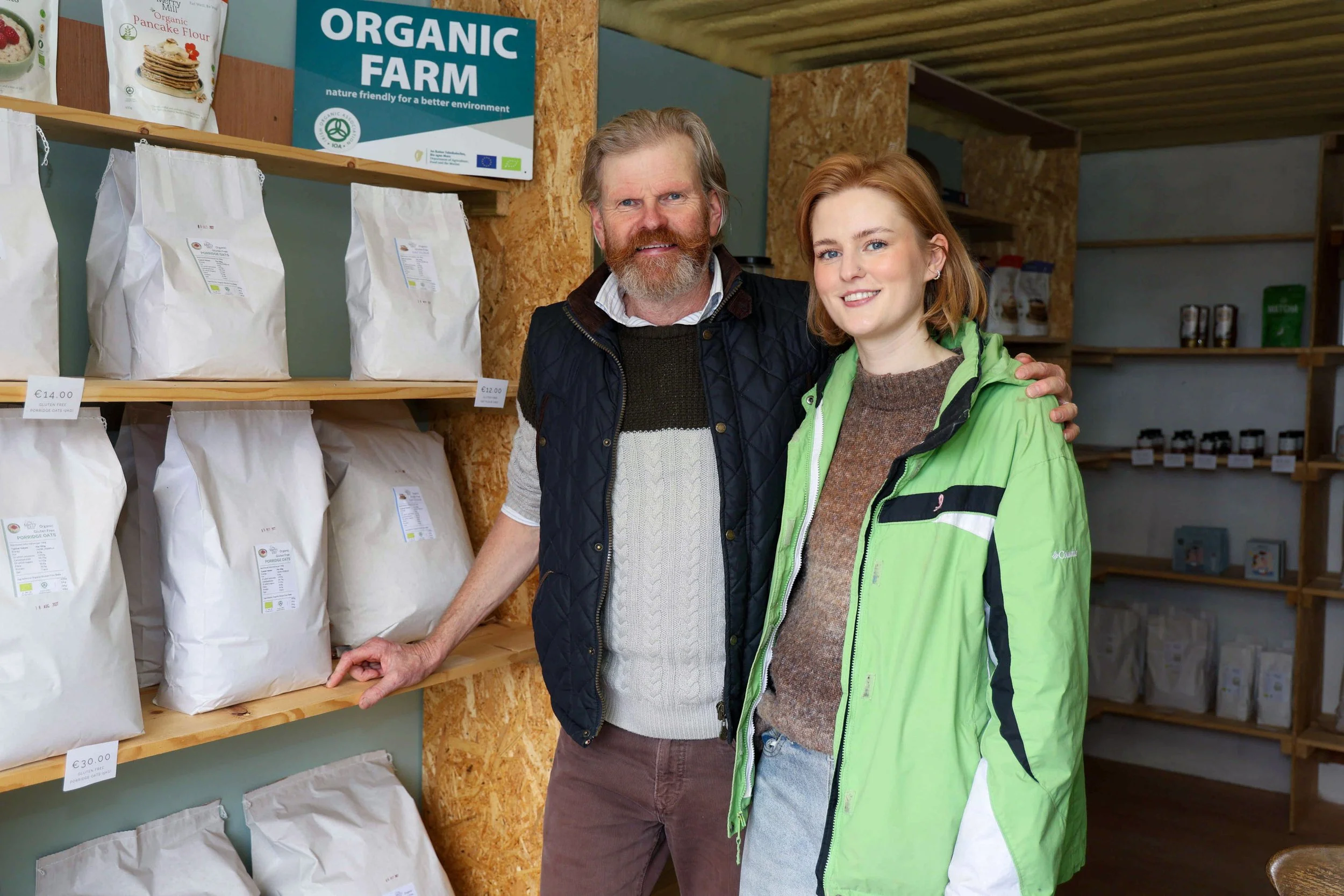
We grow oats, mill them a short distance from where they are harvested and turn them into food. This means the journey from field to mill is incredibly short — our food miles are measured in feet, not miles.
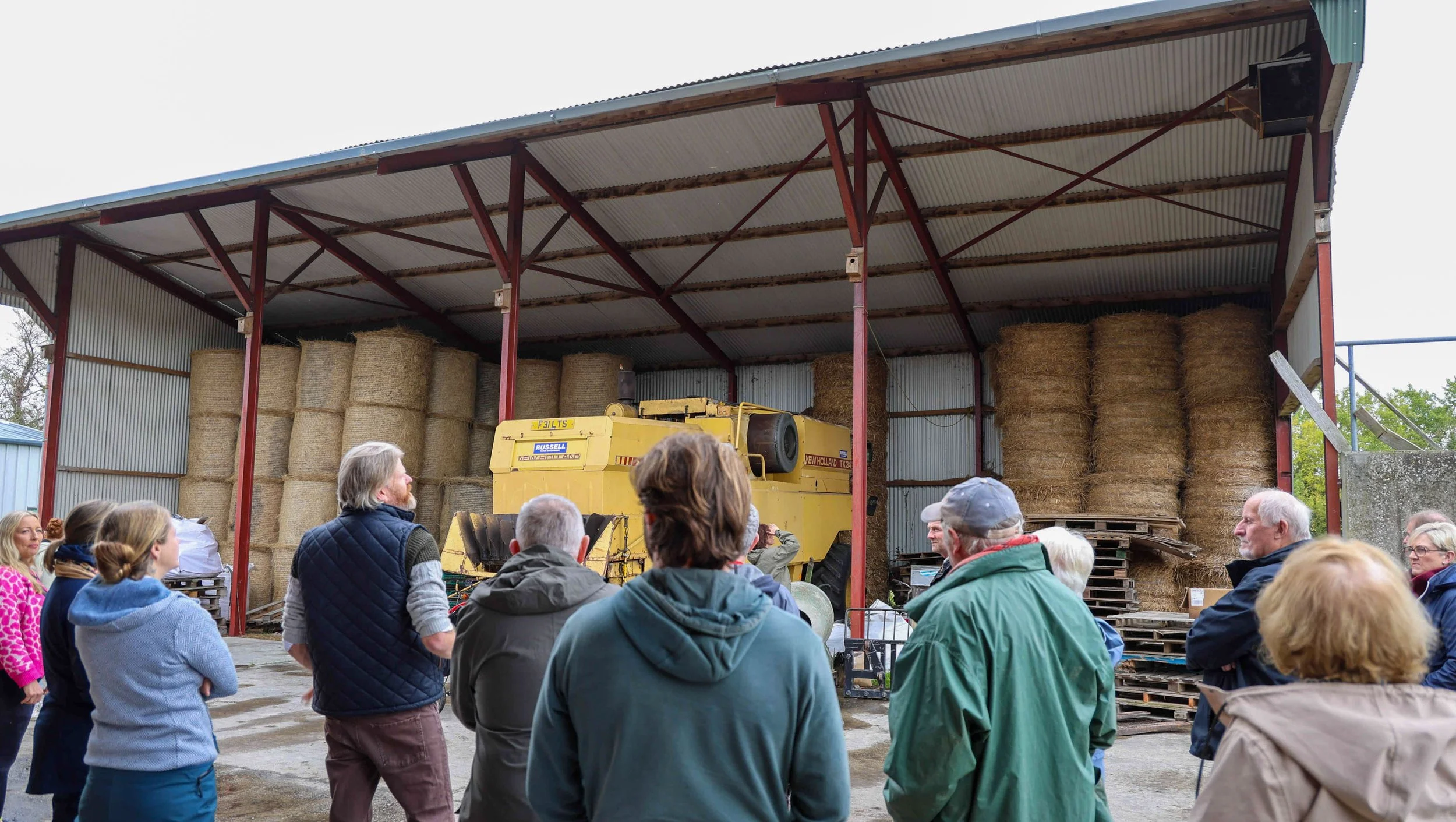
The oat straw left after harvesting doesn't go to waste either. It is used as bedding, while the oat hulls from the milling process are used as cattle feed.
Even the straw has another life. Once it has served its purpose as bedding, it can be composted down and returned to the land as a natural fertiliser, helping to feed the soil and complete the cycle.
Supporting biodiversity
Our commitment to biodiversity extends beyond the crops we grow.
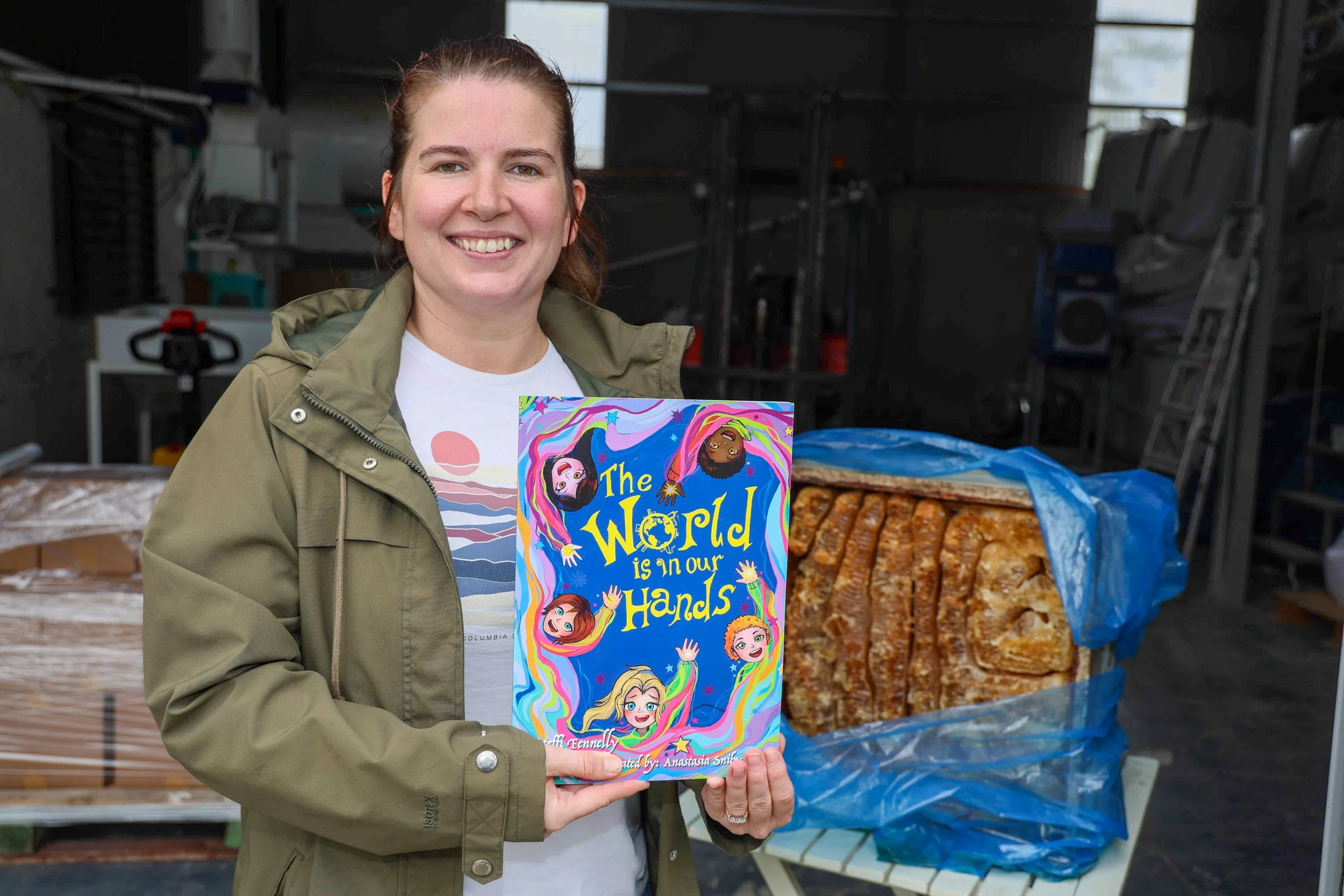
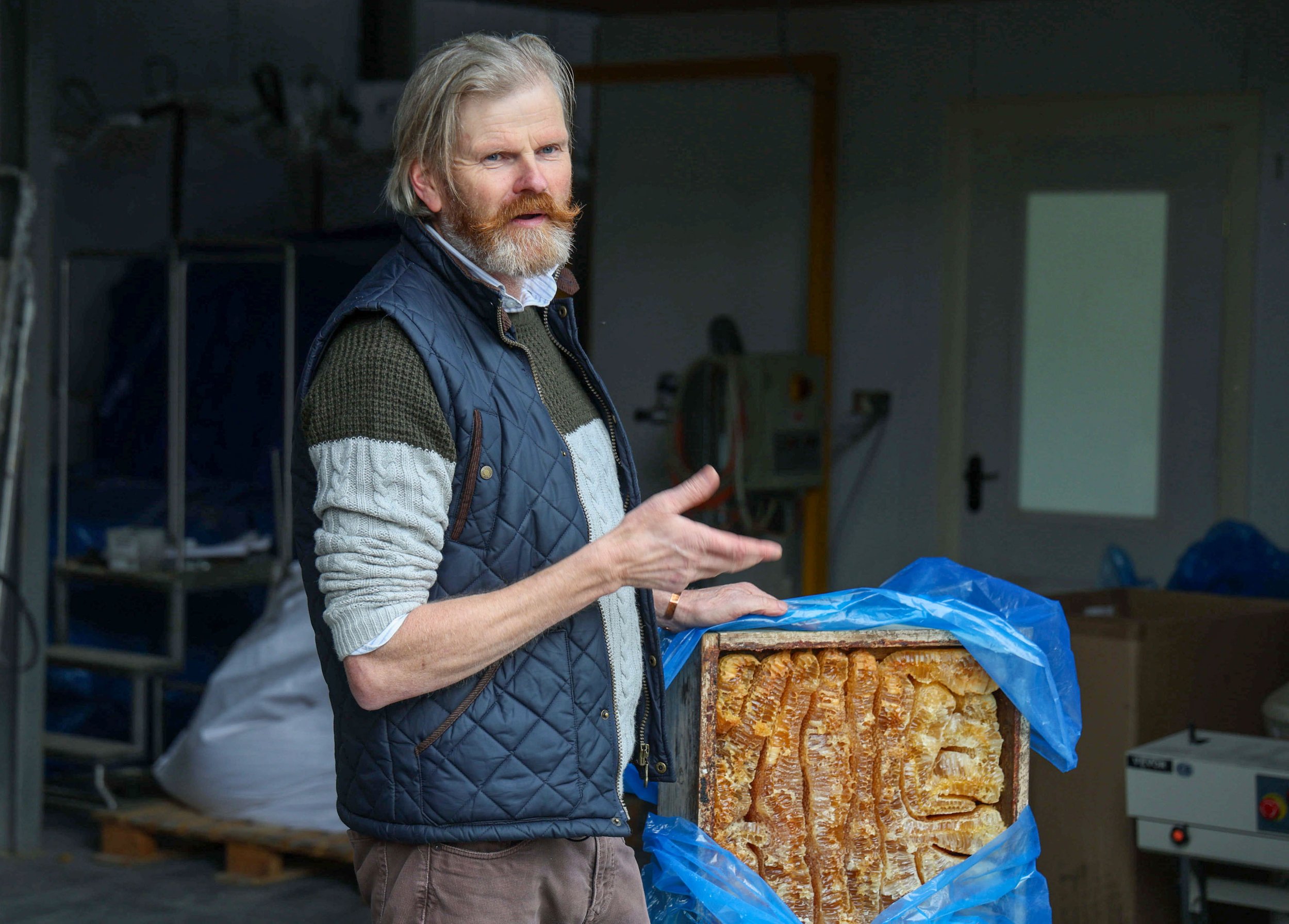
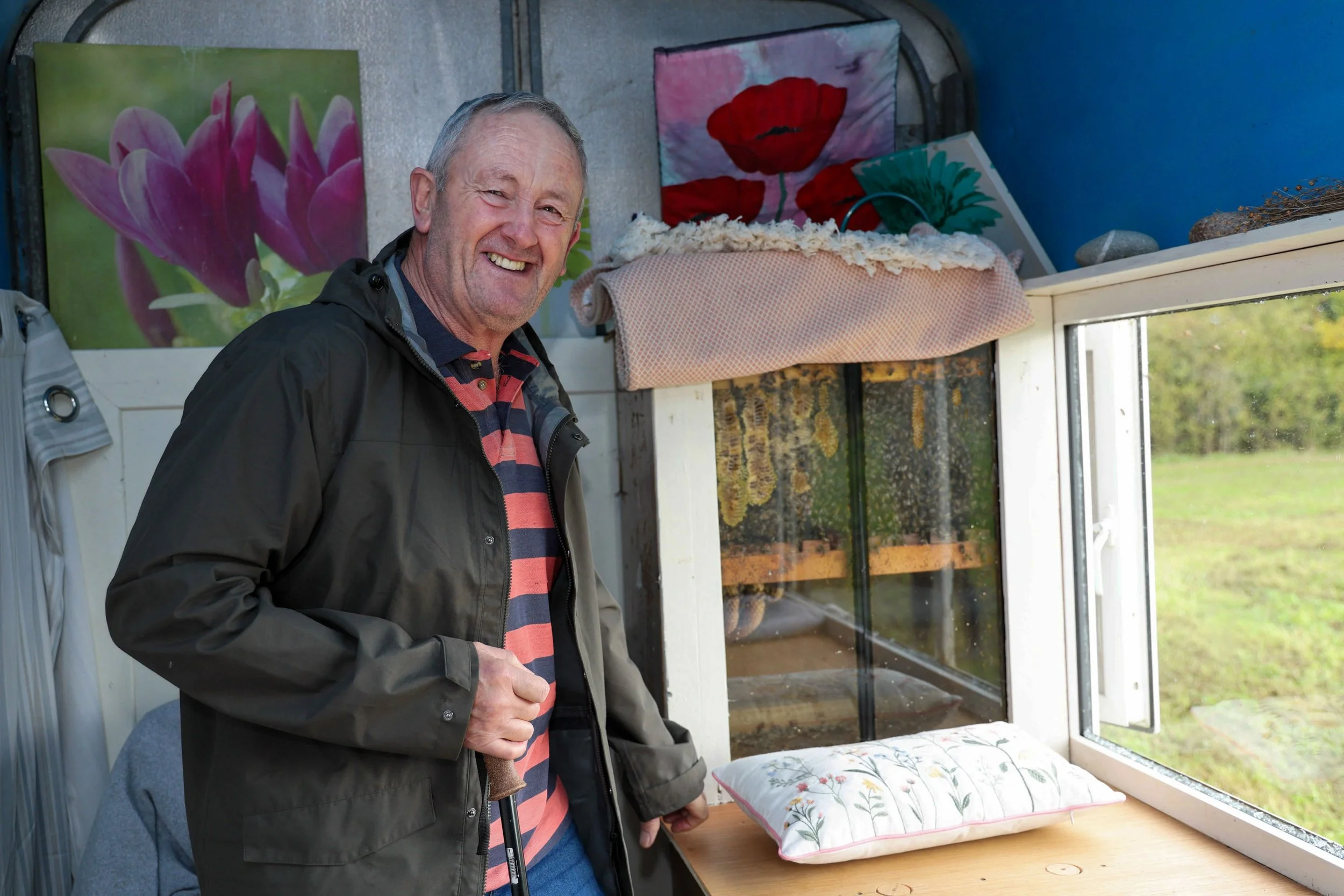
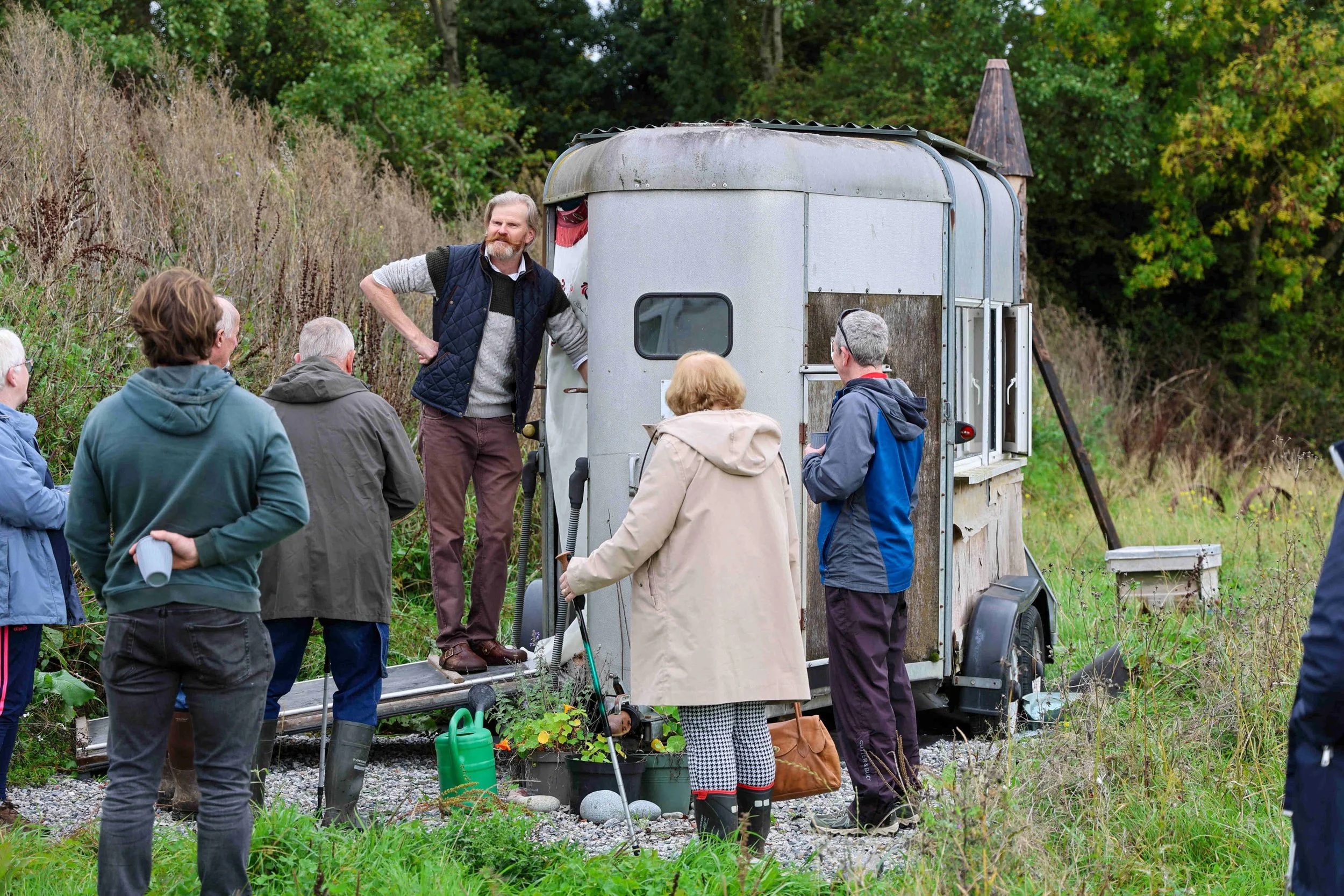
We currently have nine beehives on the farm, providing a home for bees and supporting pollination across the farm and surrounding landscape.
The bees are just one part of a wider ecosystem that we are working to encourage. By creating space for nature and managing the land with biodiversity in mind, we can support insects, pollinators, birds and other wildlife while continuing to produce food.
From field to food
One of the things we wanted to demonstrate during the farm walks was that sustainable food production doesn't have to be complicated.
It can be about making good decisions at every stage — from the health of the soil and the biodiversity on the farm, to how we process, package and deliver our products.
We use biodegradable packaging, including paper boxes and paper tape, helping us to reduce our reliance on unnecessary plastic.
For us, sustainability is about looking at the whole system rather than focusing on just one aspect of farming.
Farming and nature working together
Hosting the farm walks during Climate Action Week gave us a great opportunity to share what we do, but also to have conversations about the future of farming.
Our farm is just one example of how small, practical changes can add up to create a more circular, resilient and sustainable way of producing food.
From healthy soils and biodiversity, to bees, short supply chains, renewable uses for farm by-products and low-waste packaging, the aim is simple: to produce good food while looking after the land that produces it.
We were delighted to welcome people onto the farm during Climate Action Week and to share our experiences with the local community. We hope the walks showed that farming and nature don't have to be competing interests — with the right approach, they can work hand in hand, creating benefits for the environment, the farm and future generations.